|
Home - The Village Today - History - Maps - Memories - Newspapers - Picture Gallery - World Wars |
|
Home - The Village Today - History - Maps - Memories - Newspapers - Picture Gallery - World Wars |
I still have a Scout diary for 1942 and have checked this for the date and find that I noted the plane crash. It must have been very hot weather at that time as I also noted that there was a large undergrowth fire up Drum Hill Lane that same weekend with several fire engines in attendance. I also made a note that the following evening cycled over to look at the wreckage between Breadsall and Stanley Village. There was, of course, an Army guard posted to prevent any unauthorised person approaching too close to the wreckage. After the crash, there were many rumours as to the cause, which of course would be a close secret at that time and it is very interesting to read the details of the real reason.
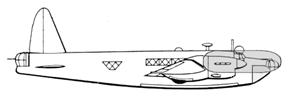
My father worked at the nearby Mapperley Colliery just past the Candle, on the outskirts of the village. We had just walked past the large house called The Gardens in Shipley estate and were going down the coach road towards Mapperley Reservoir when I heard an aeroplane whose engines were making a very unusual noise. I looked over towards Mapperley and just beyond, high in the sky, I saw an aircraft, which, as a schoolboy who was an aeroplane recognition enthusiast, I knew to be a Wellington Bomber, although an unusual shape. I can remember saying “Look Dad, part of it is breaking away” and I thought I saw at least one figure with a parachute, or a partly opened one, fall out of the Wellington. Of course being at that adventurous age, I was all for going through Mapperley Village to find the crash. Anyway, we carried on to The Candle where Dad had his pint, Mum her port and lemon and me a lemonade. No one had seen the disaster and when I told my friends the next day, I think they though I was making the story up. The 16 July 2002 report in Bygones in the DET was the first full account I have read about the crash, probably because it was hush-hush at the time. The article also brought positive memories of those Sunday evening walks around the Shipley estate, past the two collieries and dozens of empty and full coal trucks, then home to fried up remains of Sunday dinner.
Safely in the cottage, Mr Briggs did his best to calm us down. After a while he led me towards my home, taking a short cut through Quarry Farm, where we came across a dead man, presumably from out of the plane. This was confirmed later. Three other bodies were found close by. The main body of the plane landed between the houses on Derby Road where I lived and the brickyard houses where my friend lived. We were so lucky. It was a very frightening experience for two 14-year-old girls. It left us too afraid to go on our favourite walk ever again, haunted by the memory of that fateful day. Mrs D Page (Nee Burrows) now lives in Shelton Lock but lived in Ockbrook when she was 14 ½ years old at the time of the accident and hadn’t long come back from going to church. She looked up in the sky and saw the plane break up, it was a sight I will never forget it is so vivid in my memory after all these years. There were several people ran up the gitty up towards the Moravian Settlement and we found a part of the plane in someone’s garden it was still smouldering and a little white after that the police arrived to cordon it off. Mrs May Whatton of Nottingham remembers well the Wellington Bomber tragedy. It was a lovely summer evening in July 1942. My mother, father and myself were in the garden. The plane had been flying around for some time, I remember well my father remarking, “It’s one of ours”, meaning, its not the enemy. We watched, and listened, by the sound of the engine, realised the plane was in trouble. We watched in horror as out of the pale blue skies, the plane plunged into a field at the top of Stanley Hill. The wreckage was far and wide, some of the plane was found at the old Morley railway tunnel and some as far as Ockbrook and also near to Locko Park. The next morning travelling to Derby to work on the Felix Bus (everyone knew one another) so it was the topic of conversation, we then learnt that the crew had been killed and we were all very upset as we all had school friends and relatives in the RAF. I am pleased to know that a monument is being erected in St Andrews Church grounds in memory of such gallant young men.
Geoff Attenborough of West Hallam was only 7/8 years old at the time of the accident and lived in Stanley Common having previously lived in the Brickyard in Stanley Village. His father, mother, sister and himself had walked to Stanley to see friends and they were walking alongside the stream near to the Bridge Inn at the time of the accident and it is only the recent exposure that has reminded him he knew of the accident. Jean Sibson (Maiden Name Bartram) from Breadsall was born and brought up in Stanley and on 12 July 1942 was an 11-year-old girl living on Derby Road in the village and she remembers the incident as if it were yesterday. “I was there when it happened and in fact, only by the Grace of God that the main body of the aircraft narrowly missed our house where my mother lay ill, landing in the field immediately behind our garden. My elder sister Dorothy, out walking with her friend by Quarry Farm, also had a lucky escape and was shocked to find the body of a crewmember where they had been only minutes earlier. Because of our mother’s illness I had just prior to this event, spent two weeks with relatives in Sheffield where I had become friendly with a girl my own age by the name of Betty Gillott, a pretty auburn haired girl who lived next door. By an ironic twist of fate, the wireless operator, Flight Sergeant Ronald Gillott who lost his life on that fateful day, virtually on our doorsteps, was her brother.
Mrs Ethel Stanton who now lives in Horsley Woodhouse had a sister in the WAAF who on the 12 July 1942 was home on leave. Her sister had a recurring dream of an aircraft accident and they were walking the fields near Stainsby Avenue when they saw the accident quite clearly and witnessed the aircraft pieces falling to the ground. Her sister was so shocked that she ran off. Mrs Marie Taylor (Maiden Name Hawley) lived in Mapperley in 1942 and her father worked in the Lamp Cabin at the Nibby Colliery (The Stanley Colliery Pit head is now where KPH makes Kayaks and canoes near to the old West Hallam Railway station) She had been at work at Midland Railway Station and had come home on the Trent Bus. She was walking towards home when she witnessed what she thought at the time was a German Plane crash and rushed home and told her mother she had seen “One of their planes blow up in the sky”. It was not until later she sadly learnt it was in fact a British Plane.

Disclaimer - Copyright - Is this page correct? Something wrong or missing? Please let me know. Also contributions very welcome |



 Ken Tucker of Kniveton wrote he was extremely interested in reading the report of the Wellington test flight of 12 July 1942 (The true story of flight W5795). That weekend I was camping at Drum Hill Scout camp as patrol leader of the Rams’ patrol from the 105th Derby (YMCA) Group. We were taking part in the annual Drury-Lowe camping competition (which my patrol won) over the whole weekend. After the presentation of the Drury-Lowe flag, as we were about to strike camp, we heard an aircraft almost overhead. To our horror, we observed the plane fall apart and plunge to earth. I clearly remember an unopened parachute also falling to the ground with one of the aircrew.